
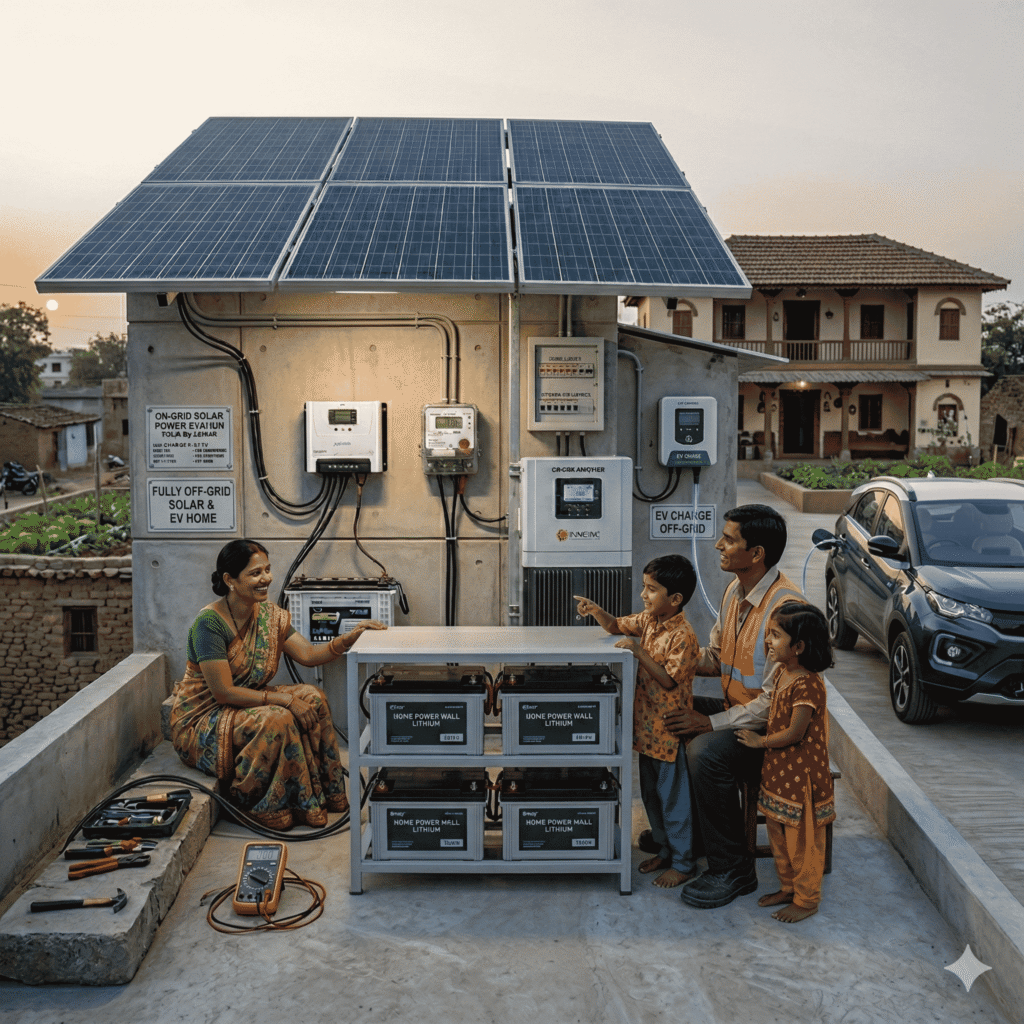
A solar power system which is not dependent on the local utility grid for its operations is known as Off-Grid Solar System. It relies on the electricity that it produces and stores rather than relying on the utility grid for power. The Off-Grid Solar System mainly comprises solar panels, an inverter and batteries wherein the inverter converts the DC (Direct Current) from the batteries and Solar Panels into AC (Alternating Current) which is used by appliances.
An Off-grid Solar System – also known as Stand-alone power system (SAPS) – works by producing electricity from captured solar energy through solar panels. The energy is generated in the form of DC(Direct Current) which is used to charge a solar battery through a charger controller.
Energy Independence
Off-Grid Solar System has zero dependency on the utility grid and produces its own electricity from the solar energy. This implies that users have full control over their power resource.
Environmental Sustainability
Unlike fossil fuels, solar energy is a more environmentally friendly and sustainable energy. Hence, it reduces the carbon footprint generated by burning fossil fuel in the environment.
Cost Savings
There is a significant reduction in electricity bills leading to cost savings. Long-term cost savings are achievable by eliminating the costs that are dependent on the grid.
Protection from Power Outages
Installing Off-Grid Solar System ensures protection from unpredictable power outages caused by sleet storms, freezing rain, or high winds. Since the Off-Grid Solar System functions independent of the utility grid these power outages do not interrupt the power supply.
Power Accessibility in Remote Areas
Off-Grid Solar System is a boon for remote areas or villages that are dependent on an unreliable utility grid for power supply or where there is No power grid available. An Off-Grid Solar System is capable of providing electricity in such cases thus, making life of the locale better in every sense possible.
Low Operational Costs
Once installed, an Off-Grid Solar System has a very low operational cost. Solar Panels last for more than two and a half decades and thus, have low maintenance cost which leads to low operational cost. The other costs include cleaning and inverter costs which are relatively lower than other fuels.